 Informacion
In ‘Offshore Attachments: Oil and Intimacy in the Caribbean’, historian Chelsea Schields illuminates how the contested management of sex and race transformed the Caribbean into a crucial site in the global oil economy. By the mid-twentieth century, the Dutch islands of Curaçao and Aruba housed the world’s largest oil refineries. To bolster this massive industrial experiment, oil corporations and political authorities offshored intimacy, circumventing laws regulating sex, reproduction, and the family in a bid to maximize profits and turn Caribbean subjects into citizens. Offshore Attachments reveals that, from boom to bust, Caribbean people challenged and embraced efforts to alter intimate behaviors in service of the energy economy, molding the industry from the ground up. Moving from Caribbean oil towns to European metropolises and examining such issues as sex work, contraception, kinship, and the constitution of desire, Schields narrates a surprising story of how racialized concern with sex shaped hydrocarbon industries as the age of oil met the end of empire.
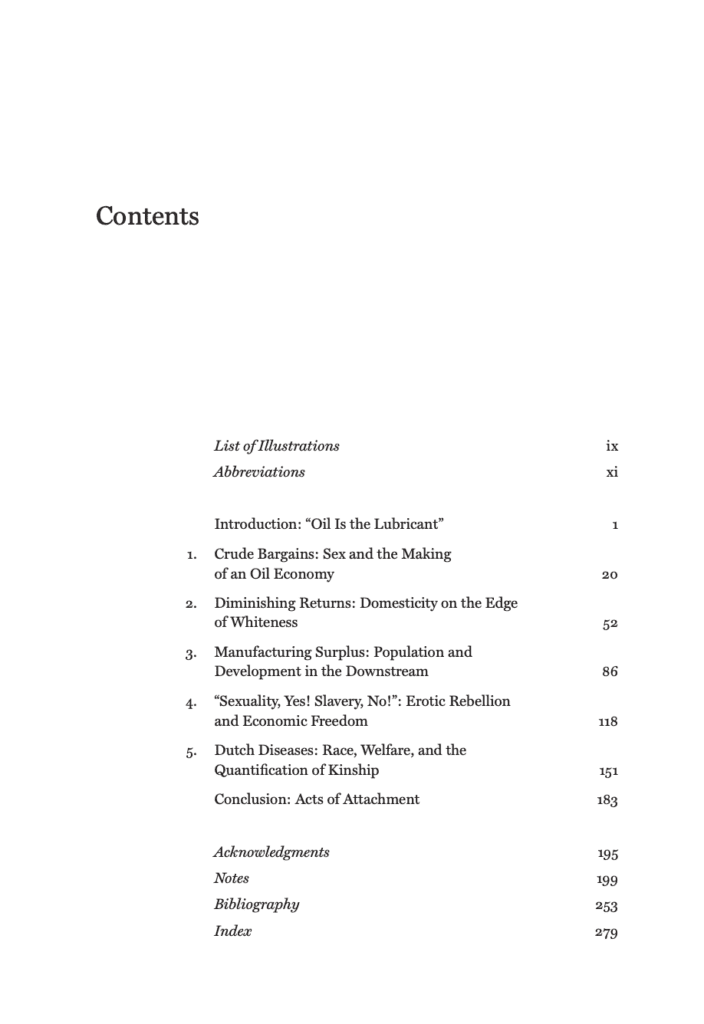
Contents
List of Illustrations ….. ix
Abbreviations ….. xi
Introduction: “Oil Is the Lubricant” ….. 1
1. Crude Bargains: Sex and the Making of an Oil Economy ….. 20
2. Diminishing Returns: Domesticity on the Edge of Whiteness ….. 52
3. Manufacturing Surplus: Population and Development in the Downstream ….. 86
4. “Sexuality, Yes! Slavery, No!”: Erotic Rebellion and Economic Freedom ….. 118
5. Dutch Diseases: Race, Welfare, and the Quantification of Kinship ….. 151
Conclusion: Acts of Attachment ….. 183
Acknowledgments ….. 195
Notes ….. 199
Bibliography ….. 253
Index ….. 279